
0117 944 4419
0117 944 4419
Party Wall etc. Act 1996
"An Act to make provision in respect of party walls, and excavation and construction in proximity to certain buildings or structures; and for connected purposes; and includes a framework for the resolution of disputes."
Planning building work?
If you are a property owner in England or Wales intending to carry out construction works (a ‘Building Owner’), early expert advice can help identify potential obstacles, optimise development potential, and influence both cost and programme.
Service of a valid notice is a prerequisite to invoking the Party Wall etc. Act 1996 and is the legal basis upon which all rights under the Act are conferred and obligations arise. For a notice to be effective, it must:
Given the statutory notice periods (1 or 2 months depending on the nature of the works) and the potential for disputes to arise, notices should be served well in advance of any intended start date.
We offer professional pre‑notification advice and support. As your authorised agent, we will:
Received a notice?
If you are a property owner who has been properly notified of proposed works under the Act (an ‘Adjoining Owner’), you may either consent to or dissent from the proposals.
If you consent, you are confirming that you have no objection to the works proceeding as described in the notice(s) and accompanying drawing(s). The works may then proceed, after the statutory notice period has expired, without further formality and without the involvement of surveyors.
The Act contains no provision for withdrawing consent. However, a fresh dispute may subsequently arise in connection with the authorised works; for example, concerning unauthorised deviation, omissions, damage, or access, which would require resolution under section 10.
If you dissent, you indicate disagreement and a formal dispute is initiated under the Act. If you do not respond to a notice served under section 3 or section 6 within 14 days, a dispute is deemed to have arisen.
You might choose to dissent if you:
You are not required to explain your reason for dissenting, but doing so can assist the process.
As your authorised agent, we will:
Resolution of disputes:
Once a dispute has arisen or is deemed to have arisen, it must be resolved in accordance with section 10 of the Act by an appointed surveyor or surveyors acting in a statutory capacity. The parties may either:
Surveyors are appointed under the Act in a personal capacity and must be independent of those appointing them. Their jurisdiction is limited to resolving matters in dispute between the parties. The role is sui generis (unique) and quasi-judicial / quasi-arbitral in nature, combining technical expertise, legal interpretation, statutory compliance, and determinative decision-making. It is therefore advisable to appoint a qualified professional with a solid grounding in construction technology and building pathology, together with a thorough understanding of the legislation and familiarity with relevant case law.
Appointing a specialist Chartered Building Surveyor qualified in dispute resolution will help ensure the Act is administered competently and effectively.
The appointed surveyor or surveyors will:
They will then determine the matters in dispute impartially and objectively by way of an Award. The Award is a legally binding document served on the parties. It sets out their respective rights and obligations, regulates the timing and manner by which the works are to be carried out, and may determine any other matter arising out of or incidental to the dispute, including the costs of making the Award.
Work regulated by the Act:
The Act covers three distinct categories of work:
Typical examples include:
A Building Owner’s right to carry out works in pursuance of the Act is contingent upon them serving a valid notice and either:
In addition, the relevant statutory notice period must have expired or been expressly waived by the Adjoining Owner.
For further advice:
We offer clear, expert advice and guidance. For a free, no-obligation initial telephone consultation - please get in touch.
Read more:
Case Study
Apart-Hotel, North End Road, Fulham, SW6
We were pleased to have successfully concluded the construction‑phase party wall awards for this redevelopment project in Fulham. As the Building Owner's Surveyor, Andrew McAllister worked collaboratively with multiple adjoining owners’ surveyors to facilitate the construction of a 41‑room apart‑hotel with a ground‑floor retail unit.
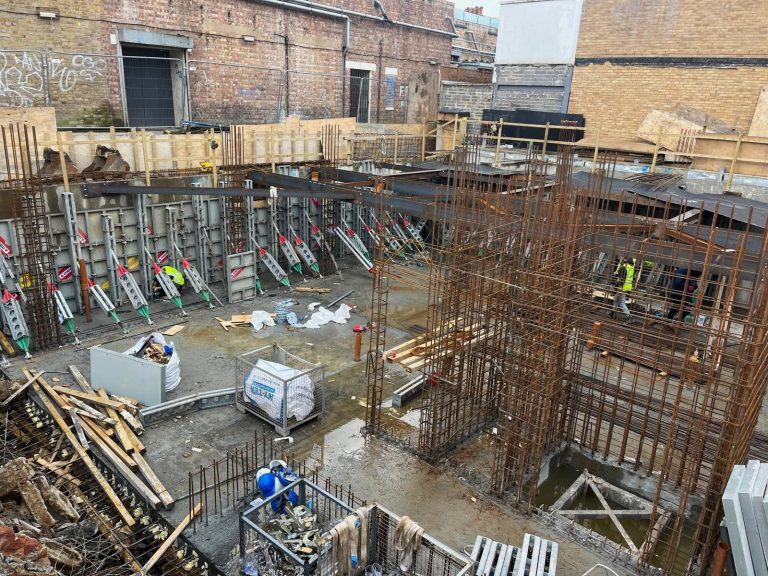
On a tight site in a busy high‑street setting, the project involved the demolition of the existing three‑storey building and a Grade II listed party fence wall, together with the installation of a contiguous piled perimeter retaining wall using continuous flight augered (CFA) piles. This enabled excavation for, and construction of, a single‑storey reinforced‑concrete basement, the construction of the four‑storey superstructure, and the reinstatement of the historic party fence wall.
This was a challenging and rewarding project that required careful coordination and communication among all parties involved. We were pleased to be associated with this development and looked forward to seeing it in use.
Services: Consultancy, service of notices, Building Owner’s Surveyor under s.10 of the Party Wall etc. Act 1996, schedules of condition, access licence agreements, and administration of security for expenses.
Client’s Project Manager – Prosper Technical; Architect – WAMM Consultants; Consulting Engineer – MWP; Temporary Works Designer – ADS Consultancy; Contractor – Mead Building Contractors
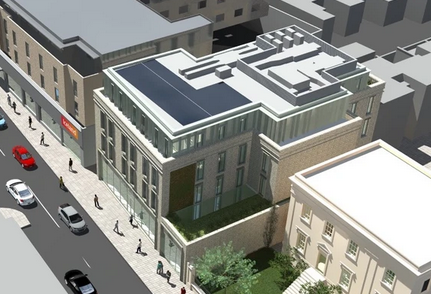
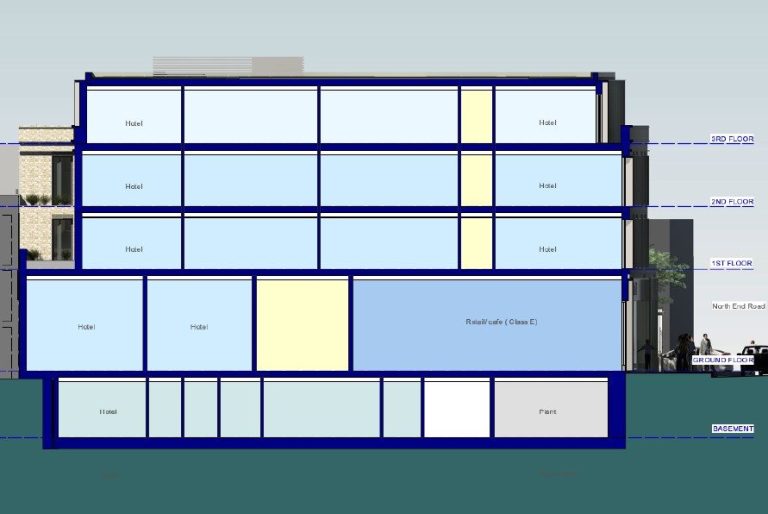
Images above courtesy of WAMM Consultants
Case Study
Hotel & Retail Development, Brixton SW9
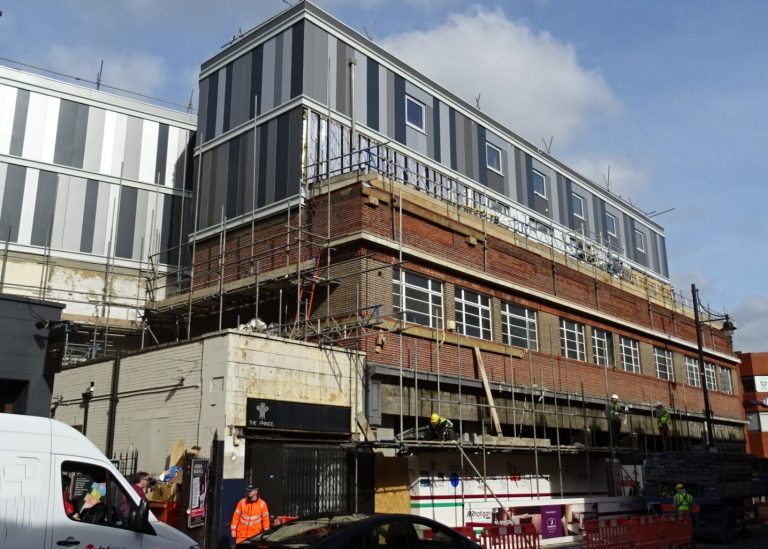
We provided consultancy services and Andrew McAllister acted as Building Owner’s Surveyor to facilitate the construction of this multi-storey redevelopment of the iconic Art Deco former Woolworths building on Brixton Road and an adjacent building on Coldharbour Lane to provide a 118-bedroom Premier Inn and a first-floor retail outlet. Situated next to the historic Reliance Arcade and with 27 Adjoining Owners, administration of the party wall process was challenging, requiring careful coordination and good communication with all parties involved.
Services: consultancy, service of notices, Building Owner’s Surveyor under s.10 of the Party Wall etc. Act 1996, schedules of condition.
Client’s Project Manager – Iesis; Architect – Boyes Rees Architects; Consulting Engineer – Malachy Walsh Partnership; Contractor – JJ Rhatigan & Company
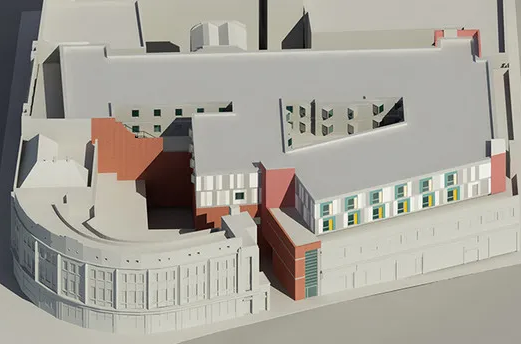
Image above courtesy of Boyes Rees Architects.
We need your consent to load the translations
We use a third-party service to translate the website content that may collect data about your activity. Please review the details in the privacy policy and accept the service to view the translations.